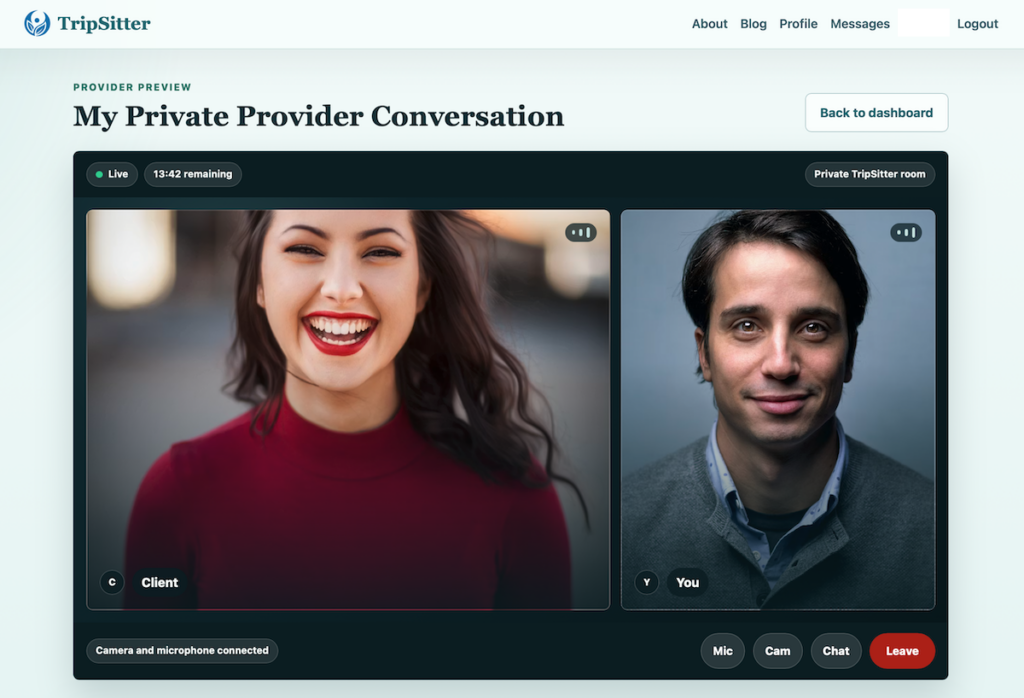
You do not always have to be in the same city as your psychedelic therapist, coach, or integration provider to benefit from their support. In many cases, remote support can be a good way to prepare for an experience, process a previous trip, or get guidance when there is no provider near you.
Remote psychedelic support usually works best for preparation and integration. Preparation may include talking through your goals, fears, history, medications, setting, support system, and expectations. Integration may include making sense of what happened afterward, identifying themes, working through difficult emotions, and deciding what changes to make in daily life.
Remote support does not mean a provider can legally guide or supervise a medicine session across state lines or outside the rules of their license. That is an important distinction. A therapist in one state may be able to provide psychotherapy only to clients located in states where they are licensed. A coach may have different limits. A medical provider prescribing ketamine must follow medical, telehealth, and controlled-substance rules. Always ask what the provider can legally do for you based on where you are located.
If you are working remotely, the first call should be about fit and safety. Tell the provider what you are looking for. Are you preparing for a legal ketamine session? Are you integrating a past mushroom experience? Are you trying to understand a difficult ayahuasca ceremony? Are you looking for general education before making a decision? The more specific you are, the easier it is to find the right support.
Ask the provider about their background. Are they licensed? Are they a therapist, coach, physician, facilitator, spiritual director, or harm reduction worker? What training do they have in psychedelic preparation and integration? What kinds of clients do they work with? What do they not do? How do they handle crisis situations?
Remote work can be especially useful after a trip. Many people assume the session itself is the main event, but the days and weeks afterward can be just as important. You may feel open, emotional, confused, inspired, raw, or unsettled. A good integration provider can help you slow down, organize what came up, and avoid making impulsive decisions based on one intense experience.
Remote preparation can also help if you live in a place without many local providers. A coach or therapist can help you think through set and setting, support, boundaries, music, intention, and aftercare. They can also help you decide whether now is the right time. Sometimes the best support is someone telling you to pause, get more stable, or speak with a doctor before moving forward.
There are limits. We do not recommend taking medicine alone. Remote support is not the same as having a sober, trained person physically present during a session. If you are considering a medicine session, especially with a high-dose psychedelic or a substance you have never taken before, think carefully about who will be with you, what the emergency plan is, and what risks apply to your body and mind.
The best remote providers are clear, grounded, and realistic. They do not pretend a Zoom call can replace every form of in-person care. They help you prepare, understand risk, process the experience, and make better choices. They respect your autonomy, but they do not leave you alone with the hard parts.
Your trip is always your own. But support can still matter, even from a distance.